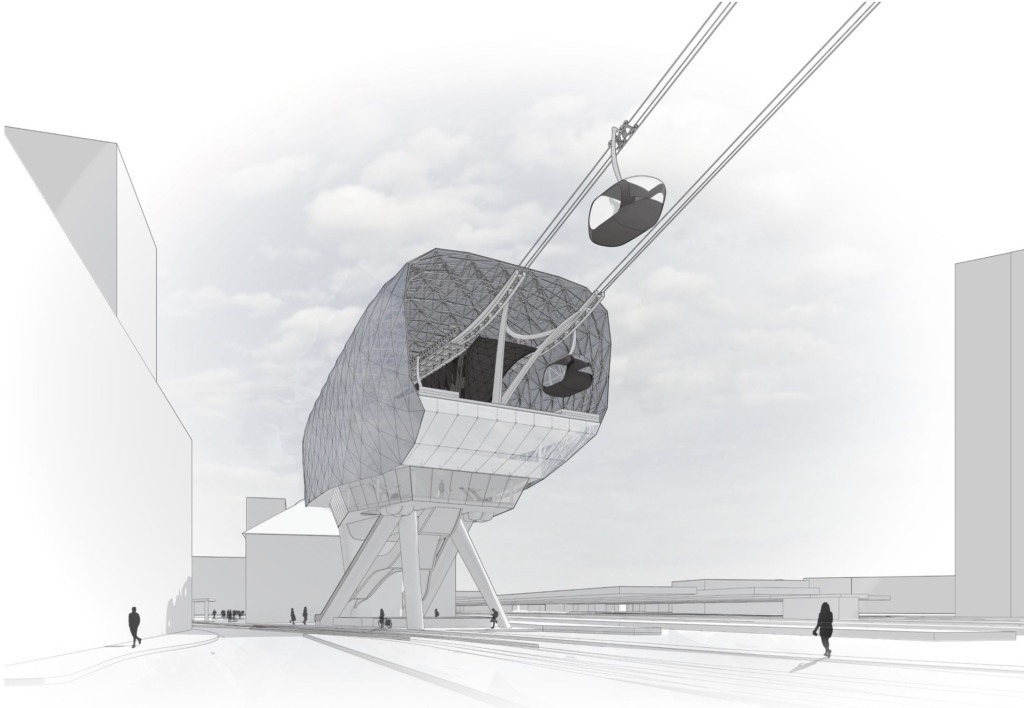
Mannheim HBFCable Car Station
An elevated mobility landmark for Mannheim Hauptbahnhof, transforming a narrow residual site into a clear transfer sequence between city, station, and cable car.
Mannheim HBFCable Car Station
An elevated mobility landmark for Mannheim Hauptbahnhof, transforming a narrow residual site into a clear transfer sequence between city, station, and cable car.
- Type
- Bachelor thesis
- Programme
- Urban cable car infrastructure
- Location
- Mannheim Hauptbahnhof, Germany
- Year
- 2020
- Institution
- Hochschule Darmstadt
- Focus
- Constrained-site integration, transfer routes, passenger-flow separation
Brief
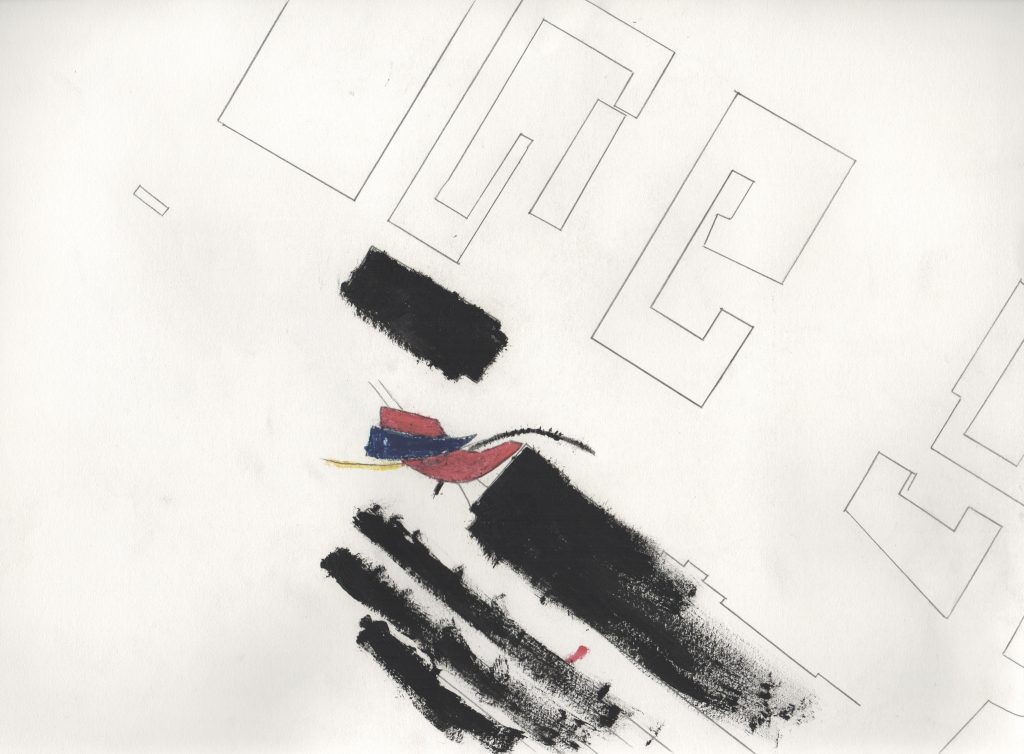
As an alternative to overloaded urban transit in the Rhine-Neckar region, the project explores a 3S cable car station at Mannheim Central Station. The site is extremely narrow and fragmented: it is cut by existing infrastructure and service functions that must remain operational. The task was to test whether a station building can be meaningfully integrated into this condition and whether new spatial connections can be created without compromising the ground-level logistics and urban permeability.
Concept
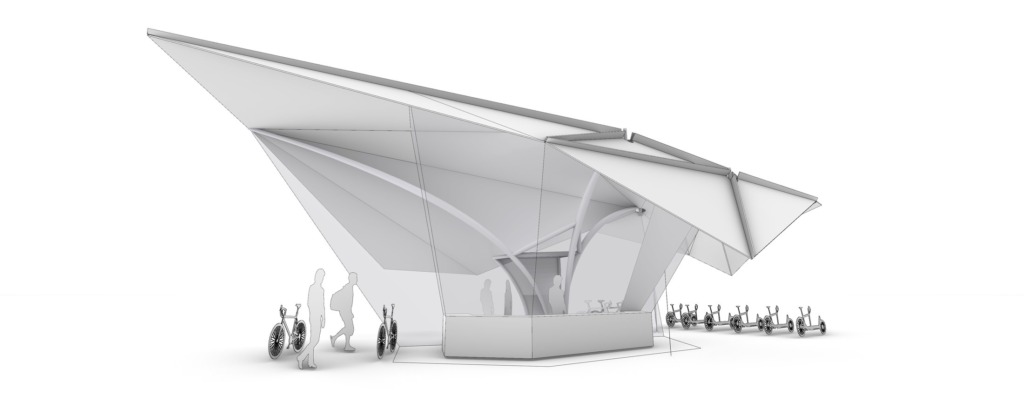
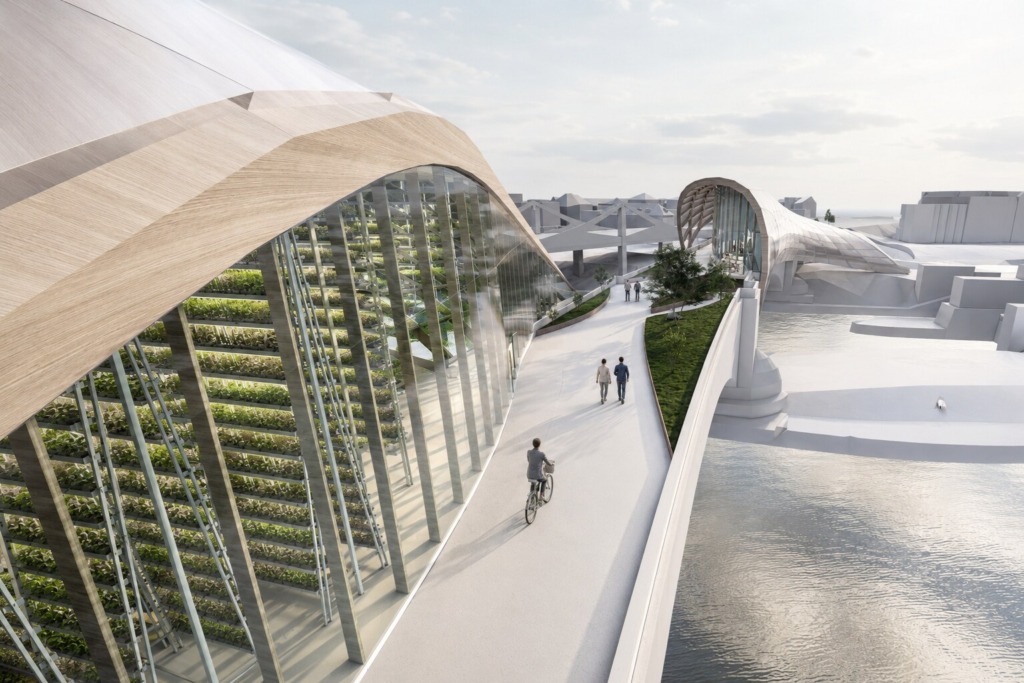
The station is conceived as a lifted volume that preserves the ground plane as an active urban layer. By elevating the main body and reducing the number of touchpoints, the building “lands” lightly on the site, allowing circulation, servicing, and public movement to continue beneath. The form reacts to the surrounding roofscape and station massing: it pulls away where the context is tight and establishes a clear orientation towards the main station.
Spatial sequence / Structure
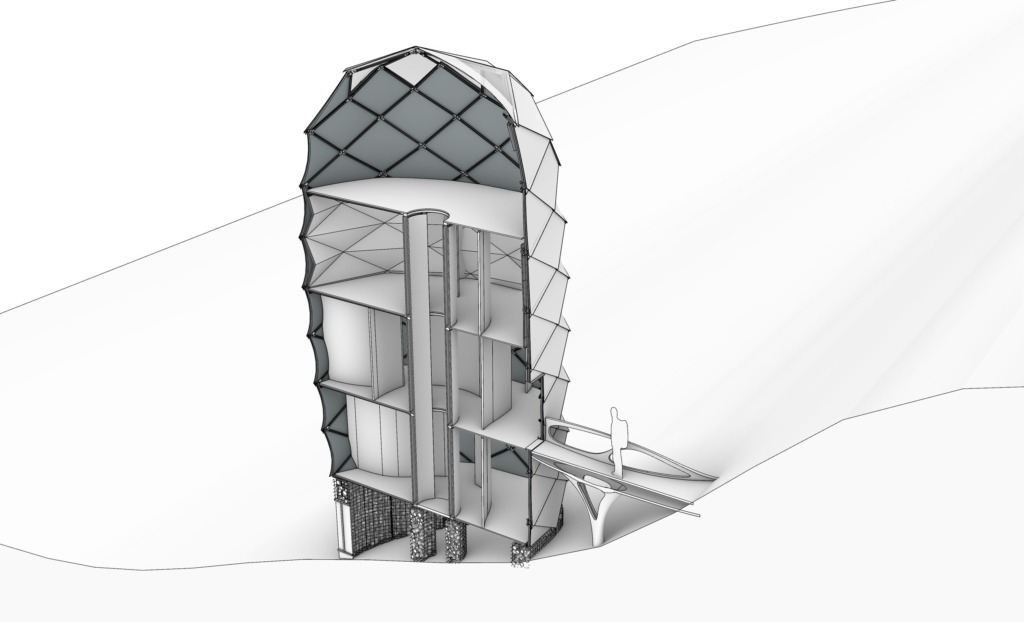
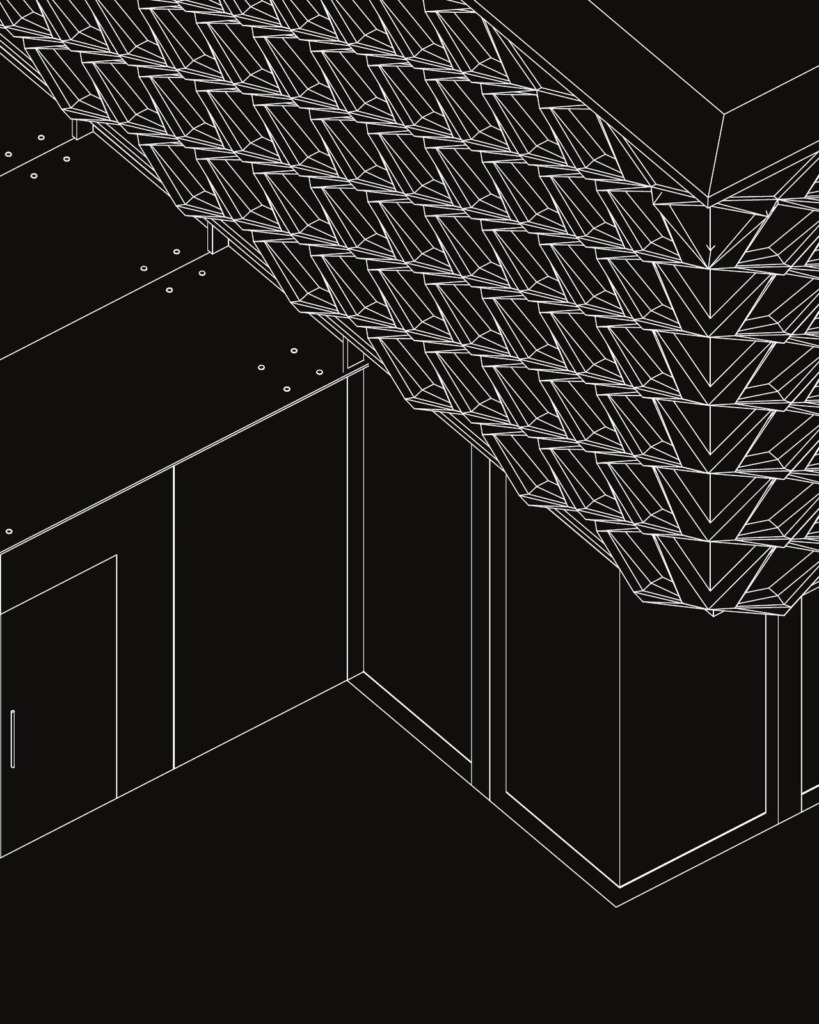
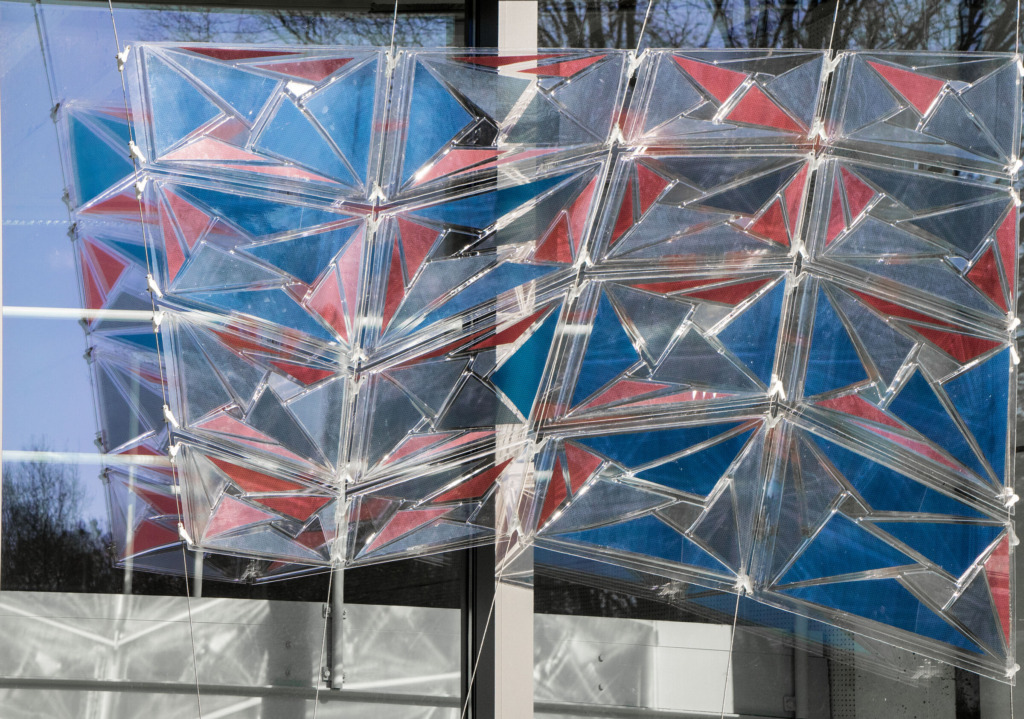
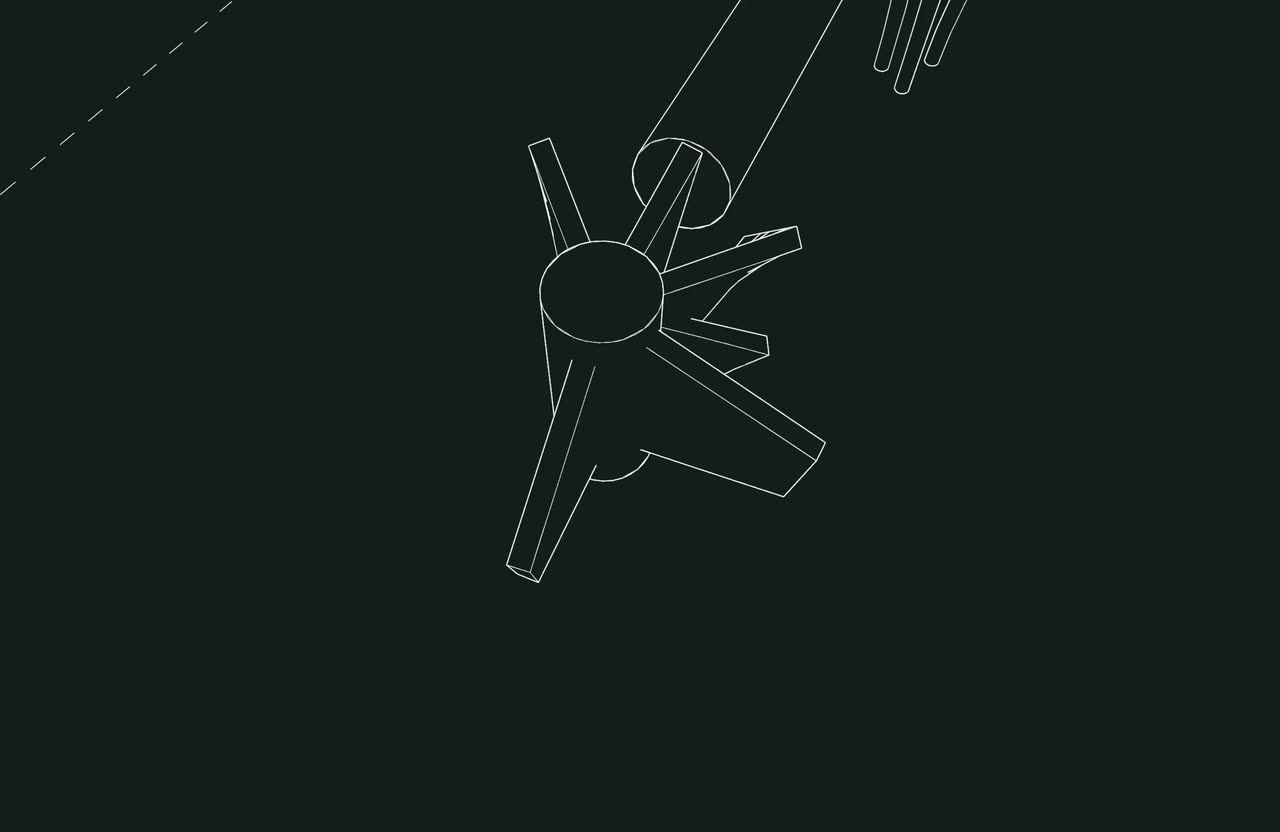
Internally, the building follows the operational logic of an aerial ropeway: arriving and departing passenger flows are separated and made legible through a linear route and staged vertical circulation. A compact access span at street level feeds escalators, stairs, and lifts integrated into the main support structure, leading through a sequence of public levels (observation deck, café, boarding). The envelope becomes a structural narrative: a faceted, triangulated shell and visible space-frame express the technical character of the station while keeping functions readable through transparency.